


London's underlying geology matters here. Much of North London sits on Palaeogene London Clay, a dense, shrink-swell deposit that compacts under foot traffic, waterlogs through winter and bakes to a near-impermeable crust in drought. Improving it is not a one-season project — the amendments below, applied consistently over three to five years, transform even the most intractable clay into workable, biologically active ground. If you'd like more detail on the geology itself, we've written separately about improving drainage in clay-heavy London gardens.
How Does Soil Structure Actually Affect Plant Performance?
Poor soil structure reduces plant performance in three specific ways: restricted root penetration, oxygen starvation at root tips, and failure of the mycorrhizal associations that underpin nutrient uptake.
Soil is an ecosystem before it is a growing medium — a matrix of mineral particles, organic matter, water, air and billions of microorganisms per teaspoon, including bacteria, fungi, nematodes and protozoa. When that structure degrades through compaction, nutrient depletion or poor drainage:
- Restricted root penetration — roots can't push through compacted ground to reach the water and nutrients they need
- Oxygen starvation at root tips — waterlogged soil excludes the air roots depend on to function
- Breakdown of mycorrhizal associations — the beneficial fungi that extend a plant's effective root system can't form in compacted, airless ground
Waterlogging is one of the leading causes of plant failure in London gardens. Research from North Dakota State University into saturated field soils found that oxygen levels drop to a point harmful to root growth within 48 to 96 hours of saturation — a mechanism that holds for garden plants as much as field crops. Waterlogged, anaerobic soil also favours Phytophthora species, the root rot pathogens responsible for losses in Rhododendron, Prunus, Taxus and many herbaceous perennials.
Improving soil structure is always the primary intervention; drainage additions alone do not compensate for poor underlying biology.
What Organic Matter Improves Soil Quality?
Does Garden Compost Improve Soil Quality?
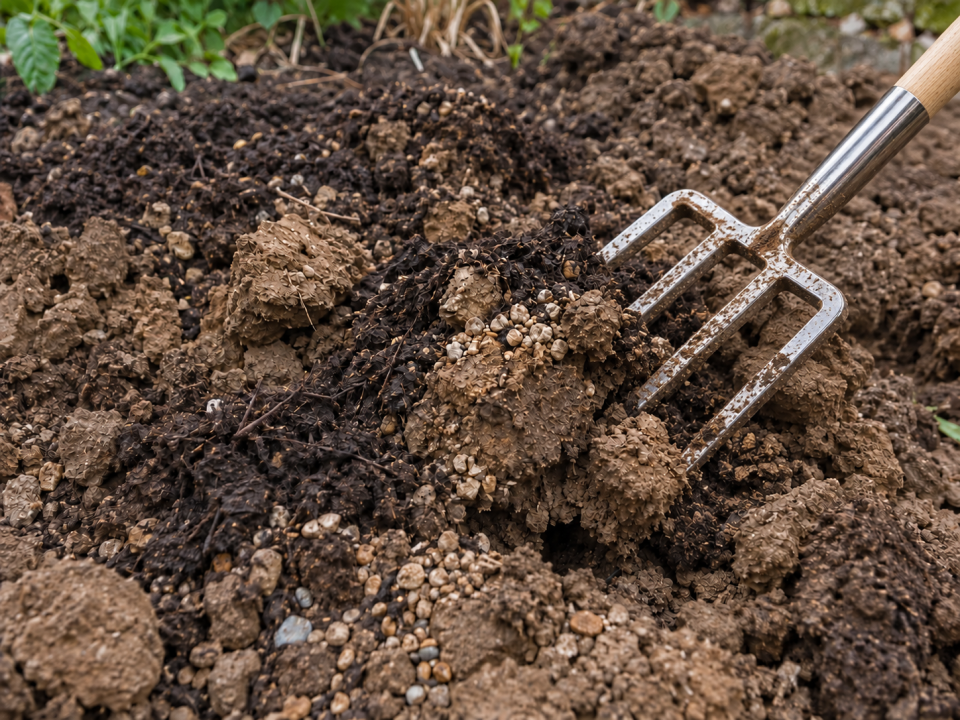
Yes. Home-made or bought-in garden compost is the most effective, lowest-cost soil amendment available. Incorporated to a depth of 5 to 10 centimetres before planting, it improves aggregation in clay soils and adds water-holding capacity to sandy ones. A digging fork, rather than a spade, is the right tool for working it in — it lifts and aerates the ground instead of slicing and compacting it, which matters as much as the compost itself on heavy clay. Boma stocks the Greenman Stainless Steel Digging Fork for exactly this job. The humus fraction compost contributes supports fungal networks, releases nutrients slowly as it continues to break down, and encourages earthworms — a healthy earthworm population reworks the topsoil continuously, creating channels that no mechanical intervention replicates.
Well-made compost reaches a carbon-to-nitrogen ratio of around 25 to 1, close to the ideal for soil microbial activity. Spread it as a 7 centimetre top dressing in autumn and allow winter rain to work it in, or incorporate it into individual planting holes at a ratio of one part compost to three parts native soil.
Boma stocks a range of peat-free composts suited to general border use, including SylvaGrow Organic Peat Free Compost, certified organic by the Soil Association and available in 15L and 40L bags.
Is Leaf Mould Worth Making for Soil Improvement?
Yes. Two-year-old leaf mould is one of the best soil conditioners for improving tilth and moisture retention. Leaves from oak (Quercus robur), beech (Fagus sylvatica) and hornbeam (Carpinus betulus) break down in wire cages over 18 to 24 months into a dark, friable material close in composition to natural woodland duff. It adds little in the way of NPK nutrition but dramatically improves structure and the biological life of the soil. Woodland plants such as Helleborus, Trillium and Epimedium perform measurably better in leaf-mould-enriched ground, because this is the soil profile they evolved in.
Does a Manure-Style Soil Improver Help Drainage in Clay Soil?
Yes, though the mechanism is indirect. Composted organic matter — whether traditional well-rotted manure or a modern manure-style improver — introduces organic fibre that creates channels between clay particles over successive seasons. On London Clay, three to five years of autumn applications typically shifts the ground from sitting wet through winter to becoming workable by February.
SylvaGrow Farmyard Organic Matter is Boma's go-to for this purpose. Despite the name, it isn't manure-based: it's an RHS-endorsed, Soil Association-certified soil improver made from anaerobic digestate — a by-product of UK renewable energy production — blended with up to 20% certified green compost, making it a 100% peat-free, plant-based option that performs the same soil-conditioning role. Apply as a 5 to 10 centimetre layer dug into compacted or clay-heavy ground in autumn.
What to Add to Clay Soil to Improve Drainage
Does Horticultural Grit Improve Clay Soil Drainage?
Yes, but only at quantities high enough to change the particle ratio significantly. The persistent mistake is adding a token layer of grit to a clay border. For grit to genuinely open clay structure, it needs to make up at least 20 percent of the total soil volume. For a bed prepared to 30 centimetres deep, that means around 60 litres of grit per square metre, worked in thoroughly — it adds up faster than most people expect, so check the litre size of the bag before you buy. Particle size matters too: 4mm to 6mm angular washed grit creates genuine air pockets, where fine sand simply fills the gaps between clay particles instead. Boma stocks Horticultural Coarse Grit, suitable for incorporation into clay borders and for topping containers as a drainage layer. A spade, rather than a fork, is the right tool for the job here — it turns and inverts the ground properly, which is what it takes to distribute that volume of grit evenly through the soil rather than just loosening the surface. Boma stocks the Greenman Stainless Steel Digging Spade for exactly this.
The RHS recommends incorporating grit alongside organic matter rather than grit alone. The organic matter binds grit particles into stable aggregates, preventing them from settling out over successive seasons of freeze and thaw.
Is Sharp Sand Effective for Improving Clay Soil?
No, not for clay drainage. Sharp sand has particles small enough to fill the spaces between clay particles without creating usable macropores. Horticultural grit, perlite (for containers and raised beds) or coarse washed gravel are the effective alternatives.
Perlite, a volcanic glass expanded at around 870 degrees Celsius, maintains air pockets indefinitely without compression. At 20 to 30 percent by volume in a raised bed or container mix, it provides lasting aeration that sharp sand never delivers in clay ground.

What to Add to Soil When Replanting Plants
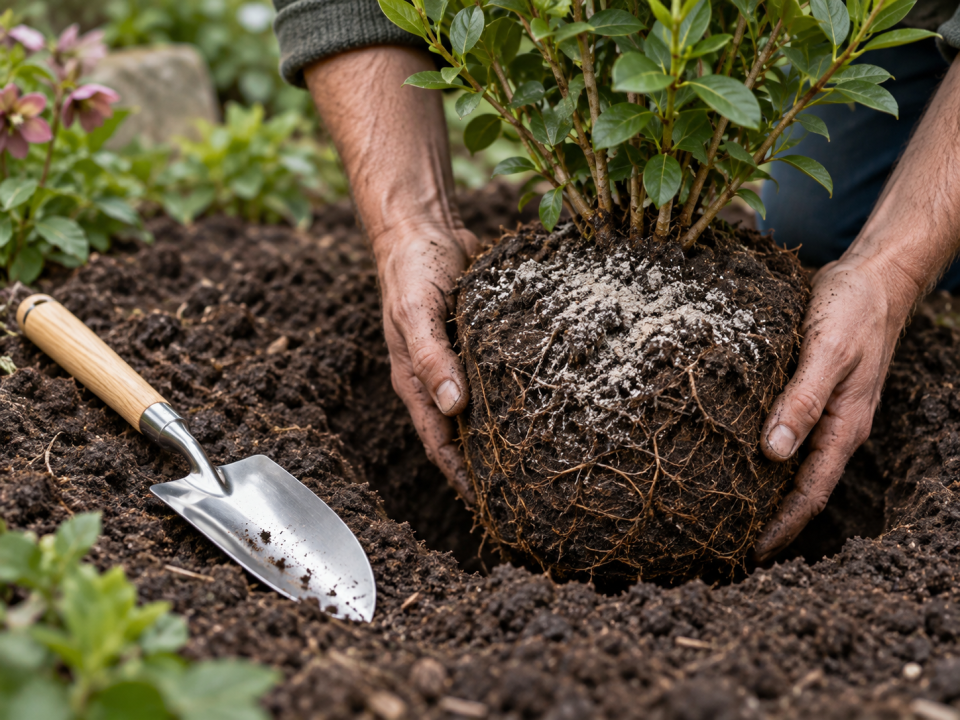
When replanting, one of the most valuable additions is mycorrhizal inoculant applied directly to the root ball at the point of planting. Mycorrhizal fungi — including Rhizophagus irregularis, one of the most widely used species in commercial UK inoculants — extend root surface area dramatically and improve water and phosphorus uptake during the critical establishment window.
Boma stocks Empathy Root Grow Mycorrhizal Fungi in both 60g and 150g sachets. The granular formula works by direct contact: dust the root ball before lowering it into the planting hole. Do not wash or rinse roots first, as surface moisture is needed for adhesion. For precision planting between existing perennials and shrubs, the Greenman Mid-Handled Stainless Steel Trowel gives better control than a full-size spade or fork, with less risk of damaging neighbouring roots.
Beyond mycorrhizal inoculant, incorporate well-composted organic matter and bone meal into the backfill. Levington Bonemeal at 35g per square metre provides a slow-release phosphorus source that supports root development without the nitrogen surge that delays establishment. High nitrogen at transplanting promotes leafy growth at the expense of root extension, which increases transplant stress and losses over the following summer.
Apply a 5 centimetre top dressing of garden compost around the drip line immediately after planting. This reduces surface moisture loss, moderates soil temperature and feeds the fungal network extending from the planting zone outward. Wait six to eight weeks before applying any balanced fertiliser.
How to Improve Soil Quality Naturally
Do Green Manures Improve Soil Health?
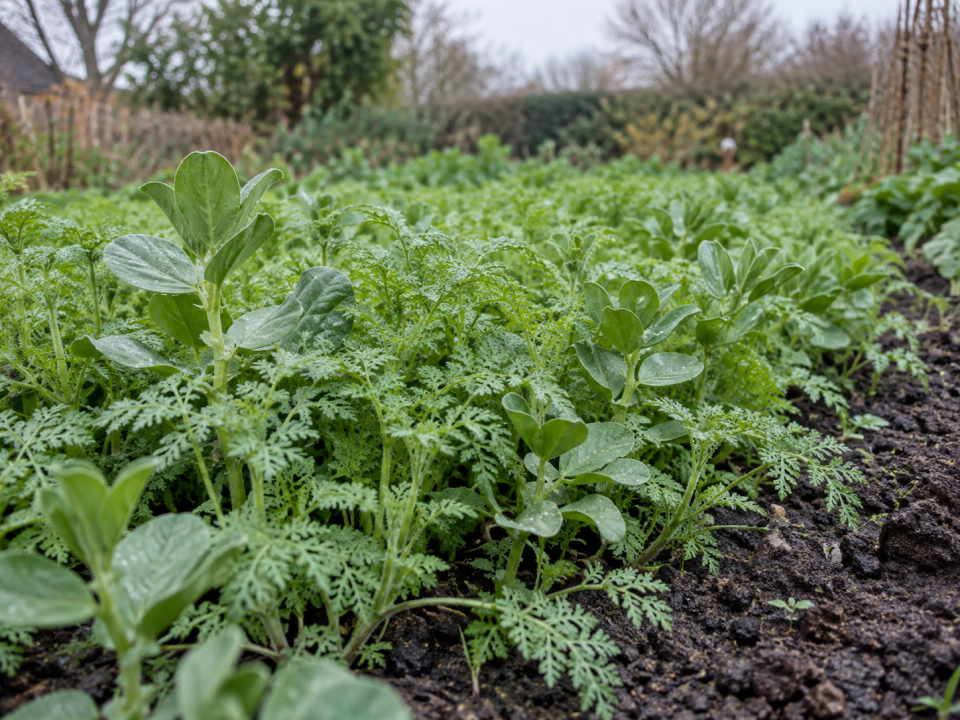
Yes. Green manures are among the most effective natural soil improvers for vegetable beds and overwintered borders. Phacelia tanacetifolia, sown in late summer after clearing summer crops, produces dense leafy growth that suppresses annual weeds and returns a substantial amount of organic matter to the soil when dug in before flowering. Crimson clover (Trifolium incarnatum) and winter field beans (Vicia faba) fix atmospheric nitrogen via Rhizobium bacteria in their root nodules, commonly returning somewhere in the region of 100 to 150kg of nitrogen per hectare at incorporation.
Winter field beans are generally hardy down to around minus 10 degrees Celsius, though a particularly hard winter can still damage them — which makes them well suited to vegetable gardens where the ground would otherwise sit bare and compacted from November through February. Incorporate them two to three weeks before the next planting to allow initial decomposition.
Does Mulching Improve Soil Quality?
Yes. Consistently applied mulch delivers one of the highest returns of any soil investment. A 7 centimetre layer of organic mulch applied annually, using composted bark or garden compost, feeds the soil as it decomposes, suppresses weeds that compete for nutrients and moderates soil temperature, reducing the freeze-thaw cycles that fragment soil structure.
The RHS confirms that mulching conserves soil moisture and reduces evaporation from the soil surface, meaning you water less frequently over summer.
Melcourt Composted Fine Bark is Boma's recommended choice for ornamental borders: sustainably sourced British conifer bark, FSC-certified, applied at 5 to 8 centimetres depth and particularly well suited to acid-loving genera such as Rhododendron and Erica, as it integrates into the soil and gradually lowers pH.
Apply mulch in late autumn or early spring onto moist soil. Mulch applied over dry ground delays rehydration rather than conserving moisture, which defeats the purpose entirely.
Understanding pH and Nutrient Availability
Soil pH determines which nutrients plants can access, regardless of what amendments have been added. At pH 6.0 to 6.5, the majority of essential nutrients, including iron, manganese and phosphorus, are at peak availability. London Clay soils frequently sit between pH 7.0 and 7.5, which locks up iron and manganese and produces interveinal chlorosis in acid-loving genera such as Rhododendron, Camellia and Pieris — yellowing between the leaf veins that's commonly misdiagnosed as a nutrient deficiency, when the nutrients are present but chemically inaccessible at that pH.
A soil test taken before committing to amendments identifies pH and macronutrient levels with precision. For acid-loving plants struggling on London Clay, Melcourt Ericaceous Compost worked into the planting hole and applied as a top dressing creates a localised pH pocket that makes nutrients available at the root zone, even where the surrounding soil is alkaline. You can also supplement with Miracle-Gro Azalea, Camellia and Rhododendron feed to correct iron and magnesium deficiency in established plants showing chlorosis.
Organic Feeds to Support Soil Health Long-Term
Several organic fertilisers feed the soil as well as the plant, building long-term fertility rather than simply supplying soluble nutrients that bypass the soil ecosystem. Levington Fish, Blood and Bone is a balanced all-purpose organic feed that releases nitrogen, phosphorus and potassium over six to eight weeks as soil microbes break it down. It's particularly effective worked into vegetable beds and new planting areas in spring, where it supports both the emerging root zone and the microbial population that long-term soil health depends on.
For border plants and established shrubs, Maxicrop Original Seaweed Extract applied as a liquid drench feeds the soil microbiome and stimulates root development rather than driving top growth, making it a useful complement to structural amendments such as compost and grit rather than a replacement for them.
Much of North London sits on dense, alkaline London Clay that waterlogs through winter and bakes hard in a dry summer — every amendment in this guide is chosen with exactly that geology in mind. Pop into the garden centre at 51–53 Islip Street, Kentish Town NW5 2DL and the team can advise on what your particular plot needs, or browse our full range of soil improvers, composts and organic feeds online. We deliver to all postcodes within the M25. Check delivery zones and charges.
If your borders need more than an annual top-dress — a tired bed that's due a rethink, or new planting into ground that's never been properly conditioned — Boma's Garden Planting Service covers consultation, planting schemes and installation for established beds and borders within a five-mile radius of Kentish Town.
Soil Amendments at a Glance
| Amendment | Best For | Application | Key Point |
|---|---|---|---|
| SylvaGrow Organic Peat Free Compost | General soil improvement, borders | 5–10cm incorporated, or 7cm top dressing | Soil Association certified; lowest-cost, highest-value amendment |
| Leaf mould (home-made) | Woodland and shade planting | Worked into planting holes once matured | 18–24 months to mature; little nutrition, huge structural benefit |
| SylvaGrow Farmyard Organic Matter | Heavy clay, compacted ground | 5–10cm dug in, autumn | Plant-based (anaerobic digestate + green compost), not manure |
| Horticultural Coarse Grit | Structural drainage in clay | ~60 litres per m² at 30cm depth (20% by volume) | Needs real volume to work; a thin layer does nothing |
| Perlite | Containers and raised beds | 20–30% by volume in the mix | Won't compress over time, unlike grit in a pot |
| Empathy Root Grow Mycorrhizal Fungi | All new planting and replanting | Dusted directly onto the root ball | Works by contact — don't rinse roots first |
| Melcourt Composted Fine Bark | Surface mulch, ornamental borders | 5–8cm depth, autumn or spring | FSC-certified; gradually lowers pH for acid-lovers |
| Winter field beans / crimson clover | Vegetable beds over winter | Sown late summer, dug in before flowering | Fixes nitrogen and prevents bare, compacted ground |
Frequently Asked Questions
How Do I Improve Heavy Clay Soil in a London Garden?
Combine organic matter with structural grit rather than relying on either alone. Dig in 5 to 10cm of compost or a manure-style soil improver each autumn, and where drainage is genuinely poor, work in horticultural grit at 20% of the total soil volume. Expect the improvement to build over three to five years on London Clay rather than overnight.
What's the Quickest Way to Improve Soil Before Planting?
For an individual planting hole rather than a whole border, blend one part compost to three parts native soil, dust the root ball with mycorrhizal inoculant at planting, and top-dress with a further 5cm of compost around the drip line afterwards. This gives an immediate, if localised, improvement while longer-term structural work continues across the wider bed.
Can You Add Too Much Organic Matter to Soil?
Yes, in specific circumstances. Very high nitrogen inputs at transplanting can promote leafy growth at the expense of root establishment, and undecomposed material can temporarily lock up nitrogen as it breaks down. Well-rotted, mature compost applied at sensible depths (5–10cm) avoids both problems — it's fresh, unfinished material and excessive nitrogen-rich feeds that cause issues, not organic matter itself.
Do I Need a Soil Test Before Adding Amendments?
It helps, particularly if you're growing acid-loving plants on London Clay or troubleshooting a bed that isn't performing. A simple pH test kit will tell you whether chlorosis is a pH problem rather than a feeding one, which changes the fix completely. For general border improvement, though, organic matter and grit are safe defaults regardless of starting pH.
Is Peat-Free Compost as Good as Peat for Improving Soil Structure?
Yes. The current generation of peat-free composts performs genuinely well for soil improvement, sowing and planting alike. Water little and often rather than in large volumes, since wood-fibre and bark-based mixes can be slower to re-wet once dry, and avoid firming the soil too aggressively — the structure is more compressible than peat and needs air to remain viable.
When Is the Best Time of Year to Improve Garden Soil?
Autumn is the ideal window for most amendments — compost, manure-style soil improvers and mulch can be dug in or spread before winter rain works them into the ground. Green manures are sown in late summer to establish before the cold. Spring is the right time for organic feeds and for topping up container compost, once plants are back into active growth.
Boma stocks a full range of soil improvers, composts and organic feeds — browse the current range online or come and see us at 51–53 Islip Street, Kentish Town NW5 2DL. We deliver to all M25 postcodes, and the team in store can advise on the right approach for your soil and your borders.
Shop Soil Improvers Check Delivery Garden Planting Service


